Monday, September 9, 2013

Back to the Future

the great interests of man: air and light, the joy of having a body, the voluptuousness of looking.
—Mario Rossi, c/o Wallace Stevens' "Evening Without Angels"
Currently sitting at my desk in my new room in New York, surrounded by piles of class readings, tweaking out on coffee-on-an-empty-stomach, and couldn't be happier. At long last, I think, the cumulative waves of anxiety (leaving work, moving, going back to school) are subsiding, and I can feel the calm beach stretching out, grounding me.

To be clear: New York and GSAPP ain't no calm beach, but the state of mind I've entered—the one where you're no longer wondering "is this the exact right thing for me to be doing?", because you've already done the thing and now it's time to get on with it—is a beautiful place to be.

Now there is a new city to slowly discover, and hopefully savor. New friends to talk to and wander around with and crank open your heart and mind. And millions of new thoughts to have, and interrogate, and turn over and over until they agglomerate into a project that absorbs you to the degree that, at least for awhile, you no longer care about anything besides hacking away at it day after day.

I'd forgotten that scholarship is a pleasure. A real, true pleasure. And to be inhabiting this funny space right now at the beginning of the semester, when I don't have much to do yet except go to the park with my books and slowly remember how much I love to read—it's quite beautiful. Apparently we remain ourselves no matter how old-and-tired-before-our-time we get. Relationships, careers, travels, marriage (marriages?), The Future: who knows. For now I'm still that kid in stirrup pants reading Beezus and Ramona all afternoon, not noticing that my lemonade is sitting on an anthill.

PS: Speaking of things I love to read, my friend Fowler just posted in his incredibly excellent blog, so we're all in luck.

Tuesday, April 10, 2012

Of Bishop and Bacon

Why hello again, dear readers. I've been doing some spring cleaning lately, both in the real world and the digital, as I attempt to shake off the staleness that settled in my apartment and my brain this winter. If you've read zees blog before, you might notice that some posts have disappeared. This is because I've sent them back to Draft land where they'll live in peace and invisibility, allowing me to move forward knowing that not everything I put on the internet has to stay there forever. Whew.

In terms of the impulse to edit one's online oeuvre, I'm naturally thinking about Elizabeth Bishop, one of my favorite poets, who published only about 100 poems during her lifetime because she was so exacting. ("[Determined] never to try to publish anything until I thought I'd done my best with it, no matter how many years it took—or never to publish at all," she'd vowed when she was young.)

Friday, March 9, 2012

Big Promises

As God is my witness....
#1 I'll never be hungry again! (thanks to the below homemade granola recipe, which I've perfected over the past couple months)
#2 I'LL WRITE IN THIS BLOG BEFORE THE WEEKEND IS UP!

get it?
got it?
good.
now onto the granola:

Grindin' it Out Granola
1-1/2 cups old-fashioned rolled oats
1 cup unsweetened shredded coconut
1/2 cup raw cashew pieces
1/2 cup flax seeds
1/2 cup raw pumpkin or sunflower seeds
1/8 cup dark brown sugar
1 teaspoon Cassia cinnamon
1 teaspoon fine-grain sea salt
1/2 teaspoon ginger
1/4 teaspoon fresh-grated nutmeg

1/8 cup olive oil
1/8 cup Grade B maple syrup
4 oz unsweetened apple sauce

Preheat oven to 300 degrees F. Line a baking sheet (preferably one with sides, i.e. a jelly roll pan) with parchment paper. Mix all dry ingredients together in a big bowl. Measure all the wet ingredients into the same measuring cup and stir to combine, then add to the dry mixture. Mix everything up real good, then spread evenly on baking sheet. Bake for 45 minutes or until golden brown, stirring occasionally to prevent burning. Let cool, then EAT! Or pour into your favorite lidded container(s) and keep for up to one month.

Tuesday, May 17, 2011

Mrs. Dalloway said she would buy the flowers herself, PART I

I've had a poster of Picasso's Blue Nude on my wall since sophomore year, initially thumbtacked and now (thanks to my pseudo-adulthood) framed. I've kept this poster around for a number of reasons—mostly because I like its colors and textures, its interesting combination of figurative and feeling, and that it reminds me of the beauty of the lines of a woman's back—but for the past two months or so I've been paying more attention to it than usual.

I began to really notice my Blue Nude again back in March, I think, right about the time that I last wrote in this poor, languishing little blog. At that point I was knee-deep in a swampy malaise composed of late-winter slush and never-ending, largely joyless work. It was a slog and I was a drag and for awhile I could barely see more than three feet in front of me (to loosely quote Andrew Bird). Then one day I came home from work and someone had posted this audio recording of David Foster Wallace's now-famous 2005 Kenyon commencement speech—published in 2008 as This is Water—and I sat down on my tiny couch and listened to it all the way through.

Tuesday, December 14, 2010

a mind of winter

Wallace Stevens was a lawyer who ran an insurance company in Hartford for most of his life. He was also one of America's greatest poets, who composed much of his work during his daily commute to and from his office. In 1921 he published "The Snow Man":

One must have a mind of winter
To regard the frost and the boughs
Of the pine-trees crusted with snow;

And have been cold a long time
To behold the junipers shagged with ice,
The spruces rough in the distant glitter

Of the January sun; and not to think
Of any misery in the sound of the wind,
In the sound of a few leaves,

Which is the sound of the land
Full of the same wind
That is blowing in the same bare place

For the listener, who listens in the snow,
And, nothing himself, beholds
Nothing that is not there and the nothing that is.
There are lots of reasons to read poems, but one of the most powerful is that, on occasion, while you are in the midst of unusual circumstances, a poem will come to you and suddenly your mind will yawn open into understanding like a stop-motion flower.

The last stanza of Stevens' poem came to me yesterday while I was hiking home across the city in the first blizzard of the year. I'd gone on an expedition to Target in order "to buy a snow shovel" (i.e. to indulge my masochistic Viking-blooded love of being outside in horrible winter weather), but it wasn't long before the pleasantly bracing walk I'd planned on taking became an hour-long frozen slog across sidewalks and empty parking lots that had been transformed into tundra by the snow and 50 mph winds. (Two miles to the east, 20-foot waves on Lake Michigan were exploding into icy spray against the hard edges of the city's beaches—as captured off to the left here by my hearty, and still partially-frozen, friend Tom.)

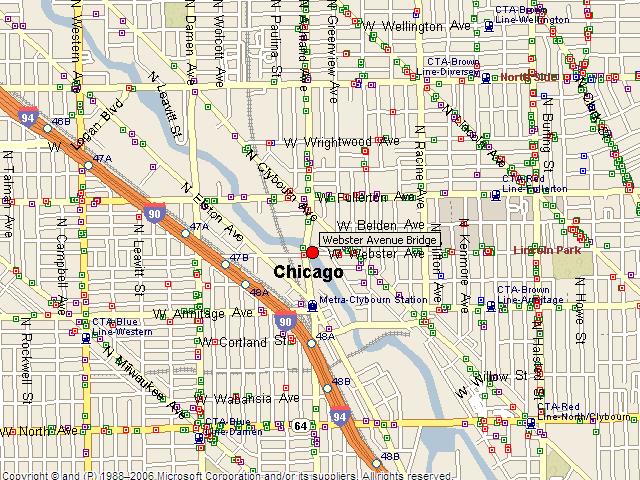
Two-thirds of my way home, I crossed the Webster Avenue Bridge and paused on tired legs in the gathering dark to look south down the Chicago River. Through the swirling snow I could see a group of ducks swimming upstream in the dirty water; behind them, half-obscured by the whiteout, the brick chimney of a former factory. There were no cars out and nearly no sound save that of the wind. And then there were Stevens' words:
For the listener, who listens in the snow, / And, nothing himself, beholds / Nothing that is not there and the nothing that is.

Thursday, November 25, 2010

Thanks

For Thanksgiving (my favorite holiday!), a poem that says all I'd ever like to say, in 4 stanzas.

I recommend reading it at the table before everyone begins eating, making sure to awkwardly start to choke up 3/4 of the way through, in order to make all of your family and friends as uncomfortable as possible. Could there be a better aperitif for a Thanksgiving meal? I think not.

Thanks
W. S. Merwin (1988)

Listen
with the night falling we are saying thank you
we are stopping on the bridges to bow from the railings
we are running out of the glass rooms
with our mouths full of food to look at the sky
and say thank you
we are standing by the water thanking it
smiling by the windows looking out
in our directions

back from a series of hospitals back from a mugging
after funerals we are saying thank you
after the news of the dead
whether or not we knew them we are saying thank you

over telephones we are saying thank you
in doorways and in the backs of cars and in elevators
remembering wars and the police at the door
and the beatings on stairs we are saying thank you
in the banks we are saying thank you
in the faces of the officials and the rich
and of all who will never change
we go on saying thank you thank you

with the animals dying around us
our lost feelings we are saying thank you
with the forests falling faster than the minutes
of our lives we are saying thank you
with the words going out like cells of a brain
with the cities growing over us
we are saying thank you faster and faster
with nobody listening we are saying thank you
we are saying thank you and waving
dark though it is

Thursday, October 28, 2010

all aboard


This week my head is a very crowded train station: noisy, jostling elbows, the brush of passing overcoats, leather cases dipping through the smoke and steam, a kind of palpable hurrying joy; and above it all the tick of the great big clock that hangs in the center of the rotunda. (Books that begin with beautiful passages about train stations that I can think of off the top of my head: Calvino's If on a Winter's Night a Traveler and Sebald's Austerlitz.) Ah and now there's the frenetic flip of the mechanical schedule board (one of my favorite sounds of all time)! Where are we going? How fast will we get there? And most importantly—will there be snacks?