Why hello again, dear readers. I've been doing some spring cleaning lately, both in the real world and the digital, as I attempt to shake off the staleness that settled in my apartment and my brain this winter. If you've read zees blog before, you might notice that some posts have disappeared. This is because I've sent them back to Draft land where they'll live in peace and invisibility, allowing me to move forward knowing that not everything I put on the internet has to stay there forever. Whew.
In terms of the impulse to edit one's online oeuvre, I'm naturally thinking about Elizabeth Bishop, one of my favorite poets, who published only about 100 poems during her lifetime because she was so exacting. ("[Determined] never to try to publish anything until I thought I'd done my best with it, no matter how many years it took—or never to publish at all," she'd vowed when she was young.)
Showing posts with label poetry. Show all posts
Showing posts with label poetry. Show all posts
Tuesday, April 10, 2012


Tuesday, December 14, 2010
a mind of winter
Wallace Stevens was a lawyer who ran an insurance company in Hartford for most of his life. He was also one of America's greatest poets, who composed much of his work during his daily commute to and from his office. In 1921 he published "The Snow Man":
 The last stanza of Stevens' poem came to me yesterday while I was hiking home across the city in the first blizzard of the year. I'd gone on an expedition to Target in order "to buy a snow shovel" (i.e. to indulge my masochistic Viking-blooded love of being outside in horrible winter weather), but it wasn't long before the pleasantly bracing walk I'd planned on taking became an hour-long frozen slog across sidewalks and empty parking lots that had been transformed into tundra by the snow and 50 mph winds. (Two miles to the east, 20-foot waves on Lake Michigan were exploding into icy spray against the hard edges of the city's beaches—as captured off to the left here by my hearty, and still partially-frozen, friend Tom.)
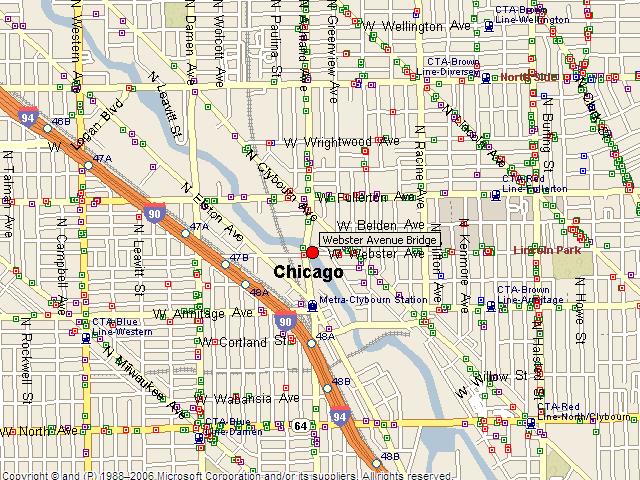
Two-thirds of my way home, I crossed the Webster Avenue Bridge and paused on tired legs in the gathering dark to look south down the Chicago River. Through the swirling snow I could see a group of ducks swimming upstream in the dirty water; behind them, half-obscured by the whiteout, the brick chimney of a former factory. There were no cars out and nearly no sound save that of the wind. And then there were Stevens' words: For the listener, who listens in the snow, / And, nothing himself, beholds / Nothing that is not there and the nothing that is.
One must have a mind of winterThere are lots of reasons to read poems, but one of the most powerful is that, on occasion, while you are in the midst of unusual circumstances, a poem will come to you and suddenly your mind will yawn open into understanding like a stop-motion flower.
To regard the frost and the boughs
Of the pine-trees crusted with snow;
And have been cold a long time
To behold the junipers shagged with ice,
The spruces rough in the distant glitter
Of the January sun; and not to think
Of any misery in the sound of the wind,
In the sound of a few leaves,
Which is the sound of the land
Full of the same wind
That is blowing in the same bare place
For the listener, who listens in the snow,
And, nothing himself, beholds
Nothing that is not there and the nothing that is.
 The last stanza of Stevens' poem came to me yesterday while I was hiking home across the city in the first blizzard of the year. I'd gone on an expedition to Target in order "to buy a snow shovel" (i.e. to indulge my masochistic Viking-blooded love of being outside in horrible winter weather), but it wasn't long before the pleasantly bracing walk I'd planned on taking became an hour-long frozen slog across sidewalks and empty parking lots that had been transformed into tundra by the snow and 50 mph winds. (Two miles to the east, 20-foot waves on Lake Michigan were exploding into icy spray against the hard edges of the city's beaches—as captured off to the left here by my hearty, and still partially-frozen, friend Tom.)
Two-thirds of my way home, I crossed the Webster Avenue Bridge and paused on tired legs in the gathering dark to look south down the Chicago River. Through the swirling snow I could see a group of ducks swimming upstream in the dirty water; behind them, half-obscured by the whiteout, the brick chimney of a former factory. There were no cars out and nearly no sound save that of the wind. And then there were Stevens' words: For the listener, who listens in the snow, / And, nothing himself, beholds / Nothing that is not there and the nothing that is.
Thursday, November 25, 2010
Thanks
For Thanksgiving (my favorite holiday!), a poem that says all I'd ever like to say, in 4 stanzas.
I recommend reading it at the table before everyone begins eating, making sure to awkwardly start to choke up 3/4 of the way through, in order to make all of your family and friends as uncomfortable as possible. Could there be a better aperitif for a Thanksgiving meal? I think not.
I recommend reading it at the table before everyone begins eating, making sure to awkwardly start to choke up 3/4 of the way through, in order to make all of your family and friends as uncomfortable as possible. Could there be a better aperitif for a Thanksgiving meal? I think not.
Thanks
W. S. Merwin (1988)
Listen
with the night falling we are saying thank you
we are stopping on the bridges to bow from the railings
we are running out of the glass rooms
with our mouths full of food to look at the sky
and say thank you
we are standing by the water thanking it
smiling by the windows looking out
in our directions
back from a series of hospitals back from a mugging
after funerals we are saying thank you
after the news of the dead
whether or not we knew them we are saying thank you
over telephones we are saying thank you
in doorways and in the backs of cars and in elevators
remembering wars and the police at the door
and the beatings on stairs we are saying thank you
in the banks we are saying thank you
in the faces of the officials and the rich
and of all who will never change
we go on saying thank you thank you
with the animals dying around us
our lost feelings we are saying thank you
with the forests falling faster than the minutes
of our lives we are saying thank you
with the words going out like cells of a brain
with the cities growing over us
we are saying thank you faster and faster
with nobody listening we are saying thank you
we are saying thank you and waving
dark though it is
Thursday, October 28, 2010
all aboard

This week my head is a very crowded train station: noisy, jostling elbows, the brush of passing overcoats, leather cases dipping through the smoke and steam, a kind of palpable hurrying joy; and above it all the tick of the great big clock that hangs in the center of the rotunda. (Books that begin with beautiful passages about train stations that I can think of off the top of my head: Calvino's If on a Winter's Night a Traveler and Sebald's Austerlitz.) Ah and now there's the frenetic flip of the mechanical schedule board (one of my favorite sounds of all time)! Where are we going? How fast will we get there? And most importantly—will there be snacks?
Thursday, September 9, 2010
western winds
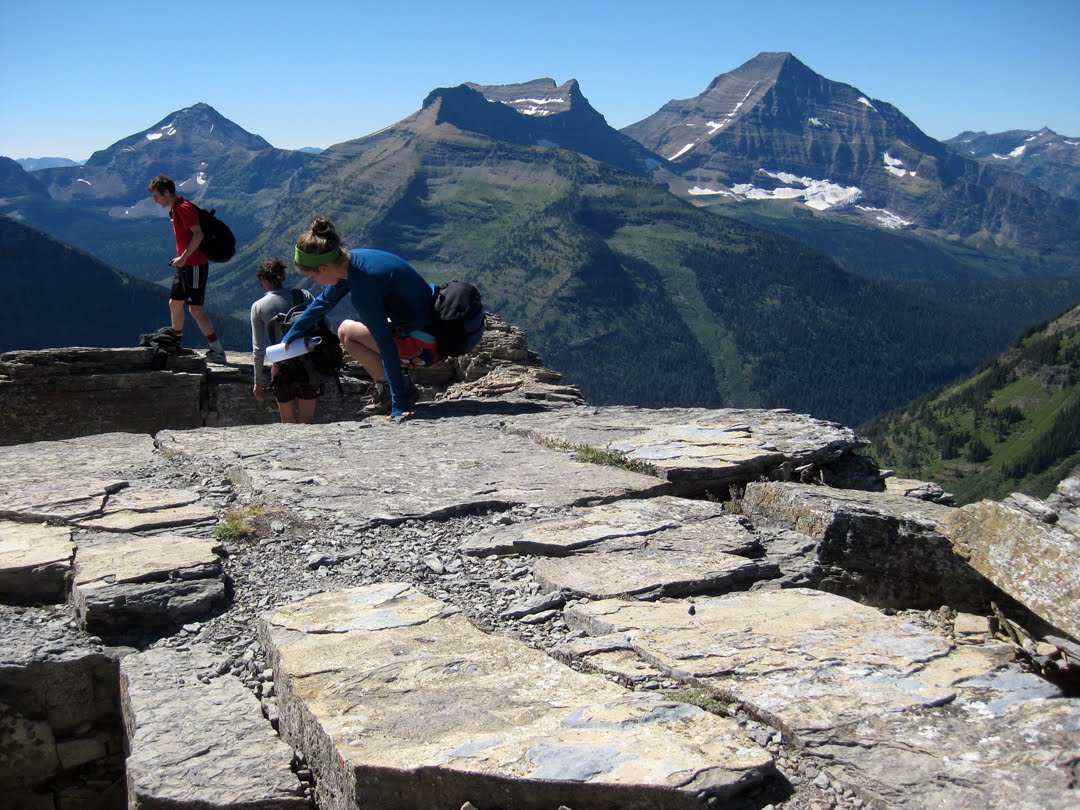
I can't remember a fall that has blown in as dramatically as this one, weather-wise (e.g. me almost being knocked off my bike multiple times by the wind) or event-wise: an amazing trip to Glacier National Park, major projects at work cropping up, and the deaths of a best friend's remarkable grandparents. So far I seem to be coping by taking ridiculously long walks and eating a lot of flax-laced granola.
Monday, February 15, 2010
Alma y Sueños
Last year, for various reasons (mostly because I lived in a neighborhood with a lot of Dominicans, and because I was completely useless helping even 1st graders with their bilingual homework at the tutoring center), I decided that I wanted to learn Spanish. So--obviously--I went to the public library, and instead of checking out something like Spanish for Dummies, I brought home a copy of Pablo Neruda's Cien Sonetos de amor.
Neruda is known for his plain/airy language, so I figured reading him would be a good way to pick up some basic vocabulary using the facing-page translations (Spanish on the left, English on the right). Plus, Spanish love poems are hot, right? (Especially when whispered into the ear of Twilight's Robert Pattinson playing young Salvador Dali!!)
Anyway, as with other library books, I began reading it on the train each day during my 30-minute commute. And almost immediately, it became my favorite commuting book ever: because jammed into a dingy car packed tight with half-asleep strangers, occupying my crumb-laden, repulsively-upholstered seat, all I had to do was begin to read and I'd be immersed in this crazy, luxuriant passion, completely unbeknownst to anyone else on the train. "Kiss by kiss I travel your little infinity,/your borders, your rivers, your tiny villages"--oh la la if only that lady with the bad perm knew what I was reading, hoooo boy! Or else I'd imagine leaning over slightly toward the bearded dude next to me, whispering
Perhaps you did not know
that before I loved you I forgot your kisses
my heart was left remembering your mouth
and I went through the streets like one who is wounded
until I understood that I had found,
love, my territory of kisses and volcanoes.
Yeah, he'd probably stop looking up the stats from last night's Red Sox game on his iPhone for that one.
So while I admit that I learned remarkably little Spanish from this venture (though there's no way I'll ever forget two of Neruda's favorite nouns, "alma" and "sueños"--both obviously useful when making small talk at the bodega), it was still way more than well worth it.
And if you'd like--because it is Valentine's Day, after all--I am now offering up a DIY version of the experience that you can recreate in the comfort of your own home (or train car, should you be lucky enough to have a smartphone)! First, look up (or print off) this poem--one of Neruda's best-known, and one of my favorites. Next, should you not currently be in the act of commuting, you can then play this video and pretend that you're on the Orange Line, somewhere between Green Street and State Street, and it's February, and gray, but inside the heart of Neruda it's a tropical hothouse that's bursting with the beauty of the body and el lenguaje español....
Neruda is known for his plain/airy language, so I figured reading him would be a good way to pick up some basic vocabulary using the facing-page translations (Spanish on the left, English on the right). Plus, Spanish love poems are hot, right? (Especially when whispered into the ear of Twilight's Robert Pattinson playing young Salvador Dali!!)
Anyway, as with other library books, I began reading it on the train each day during my 30-minute commute. And almost immediately, it became my favorite commuting book ever: because jammed into a dingy car packed tight with half-asleep strangers, occupying my crumb-laden, repulsively-upholstered seat, all I had to do was begin to read and I'd be immersed in this crazy, luxuriant passion, completely unbeknownst to anyone else on the train. "Kiss by kiss I travel your little infinity,/your borders, your rivers, your tiny villages"--oh la la if only that lady with the bad perm knew what I was reading, hoooo boy! Or else I'd imagine leaning over slightly toward the bearded dude next to me, whispering
Perhaps you did not know
that before I loved you I forgot your kisses
my heart was left remembering your mouth
and I went through the streets like one who is wounded
until I understood that I had found,
love, my territory of kisses and volcanoes.
Yeah, he'd probably stop looking up the stats from last night's Red Sox game on his iPhone for that one.
So while I admit that I learned remarkably little Spanish from this venture (though there's no way I'll ever forget two of Neruda's favorite nouns, "alma" and "sueños"--both obviously useful when making small talk at the bodega), it was still way more than well worth it.
And if you'd like--because it is Valentine's Day, after all--I am now offering up a DIY version of the experience that you can recreate in the comfort of your own home (or train car, should you be lucky enough to have a smartphone)! First, look up (or print off) this poem--one of Neruda's best-known, and one of my favorites. Next, should you not currently be in the act of commuting, you can then play this video and pretend that you're on the Orange Line, somewhere between Green Street and State Street, and it's February, and gray, but inside the heart of Neruda it's a tropical hothouse that's bursting with the beauty of the body and el lenguaje español....
Subscribe to:
Posts (Atom)